
Cheek Fillers in Nottingham — Restore Volume and Lift Naturally
⭐ 5.0 Rating · Fully Insured · By Appointment Only · Arnold, Nottingham
Cheek Fillers Nottingham | Signature Aesthetics
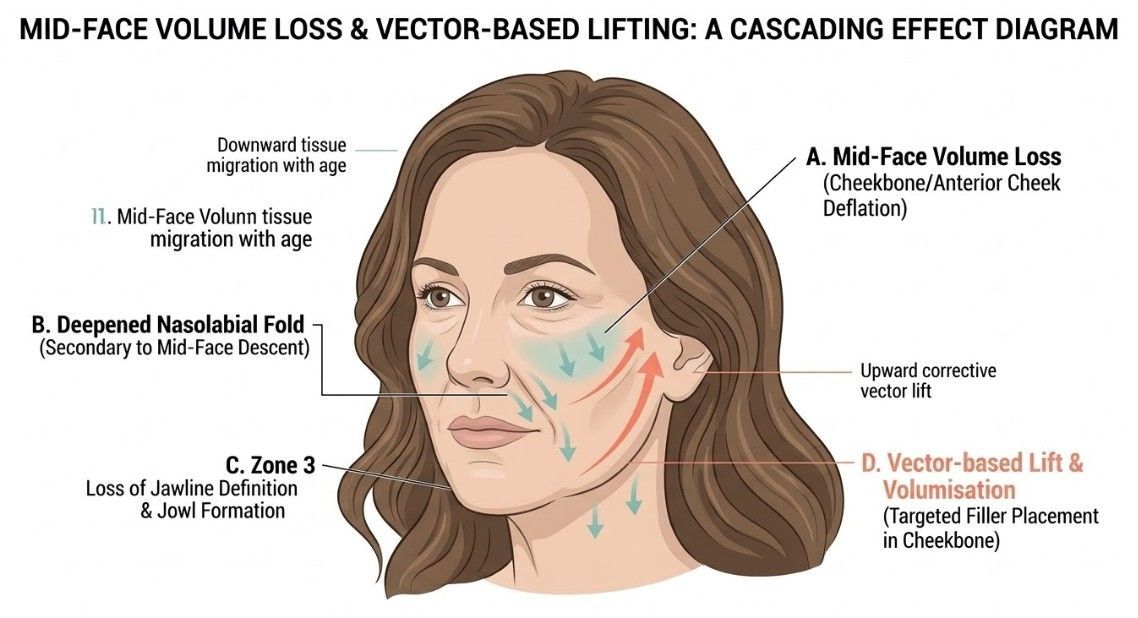
Of all the areas of the face affected by age-related volume loss, the cheeks tend to have the most significant impact on overall appearance. The mid-face is essentially the structural foundation of the face — when volume here is good, everything above and below sits well. When it reduces, the effects ripple outward. Skin that once sat smoothly over a full cheek begins to descend. The nasolabial folds deepen. The jawline loses some of its definition. The whole face can take on a slightly deflated quality that no amount of skincare quite addresses.
Cheek filler is one of the treatments I find most rewarding to carry out at Signature Aesthetics — not because the results are dramatic, but because they're so quietly effective. Restoring a modest amount of volume to the right place in the mid-face can lift and rebalance the whole face in a way that looks entirely natural. Clients often find that treating the cheeks also improves areas they were separately concerned about — the nasolabial folds, the under-eye area, the overall structure of the lower face — without those areas needing to be treated directly.
What Causes Volume Loss in the Cheeks?
Cheek volume loss is a natural part of ageing. As we get older we lose fat, collagen, and bone density in the mid-face — a combination of changes that causes the cheeks to flatten and descend over time. The process is gradual and affects everyone to varying degrees, influenced by genetics, lifestyle, sun exposure, and body composition.
Some clients notice cheek volume loss relatively early — particularly those who are naturally slim or who have lost weight. Others find it becomes more apparent in their forties and fifties. There's no single timeline, which is why assessment of the individual is always more useful than age-based assumptions.
How Is the Treatment Carried Out?
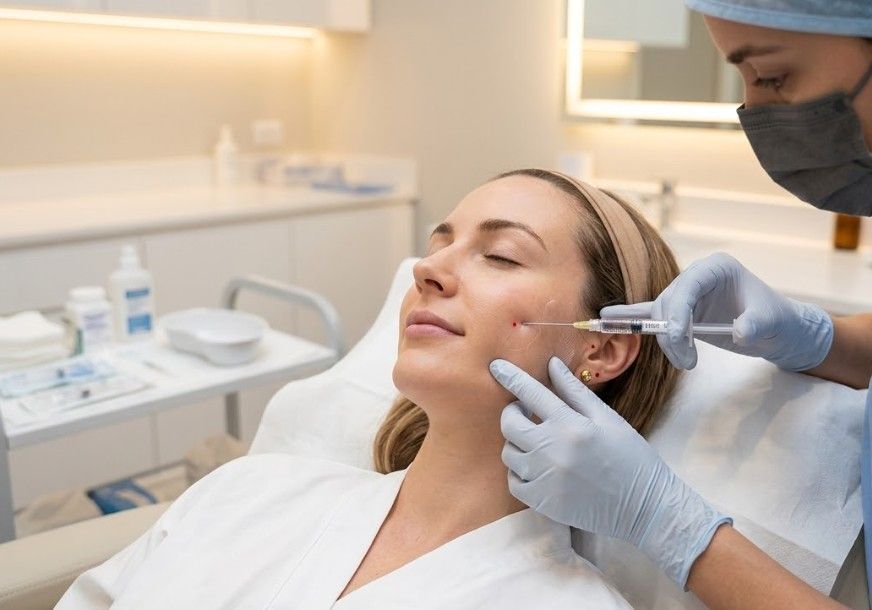
I place dermal filler into the mid-face using a combination of needle and cannula technique depending on the specific area being targeted and the result we're working towards. The cheekbone area, the anterior cheek, and the area just below the eye socket each require slightly different approaches, and the overall plan is tailored to your individual facial anatomy.
The amount of product used varies significantly between clients. Some people need only a modest amount to achieve a meaningful lift — others require more. I always start conservatively and assess the result carefully as I go, adding product incrementally rather than placing everything at once.
The treatment typically takes 30 to 45 minutes from start to finish and requires no significant downtime. I see clients from across Nottingham for this treatment including those travelling in from Calverton, Lambley, Gunthorpe, and Lowdham — many of whom are back to normal activities the same day.
What Results Can I Expect?
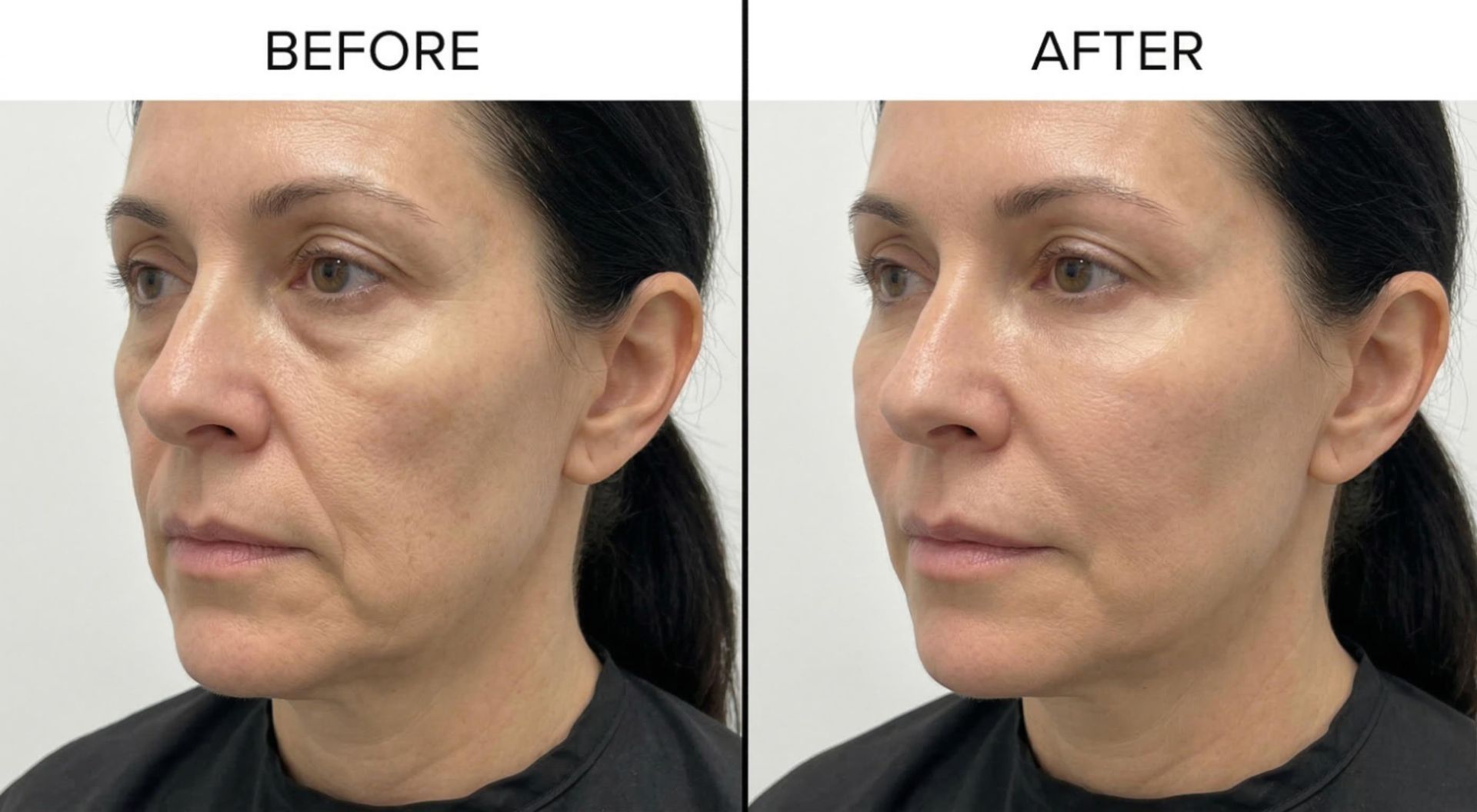
There will be some swelling after cheek filler treatment, though typically less than with lip treatment. Most clients find this settles within a few days and full results are visible at two weeks — the point at which I see all new clients for a follow-up assessment.
The results from cheek filler are among the longest lasting of all filler treatments — typically twelve to eighteen months and occasionally longer, depending on the individual. The mid-face is a relatively low-movement area which means product placed here tends to last well.
The improvement tends to be visible not just in the cheeks themselves but across the broader mid and lower face — a subtle lift that rebalances the face as a whole and can reduce the appearance of nasolabial folds and improve overall facial structure without those areas needing to be treated independently.
A Note on Natural Results
There's a version of cheek filler that has become unfortunately associated with an overdone aesthetic — overly projected, shelf-like cheeks that look more architectural than natural. It's not a result I produce and it's not something my clients come to me for.
My goal with cheek filler is always to restore what's been lost rather than to dramatically alter the structure of the face. The right result is one where the cheeks look full and healthy — the way they looked a few years ago — not one where they look like something has been added. If you're nervous about looking overdone, that's a conversation I'm very happy to have at consultation, and it's one I take seriously.
Who Is Cheek Filler Suitable For?
Cheek filler tends to suit clients who:
- Have noticed a flattening or descent of the mid-face over time
- Feel their face looks gaunt or tired despite being well rested
- Have deepening nasolabial folds they'd like to address without direct treatment to that area
- Want to restore a more youthful facial structure without surgery
- Are naturally slim and have always had less mid-face volume than they'd like
It's worth noting that cheek filler works differently depending on age and the degree of volume loss present. For younger clients looking to enhance rather than restore, the approach differs from that used for clients seeking to address more significant age-related changes. I'll discuss what's appropriate for your specific situation during your consultation.
Booking Your Cheek Filler Consultation in Nottingham
If you're based in or around Nottingham — including Burton Joyce, Stoke Bardolph, Fiskerton, or Thurgarton — and you'd like to discuss cheek fillers with a practitioner who'll give you an honest, considered recommendation, get in touch with Signature Aesthetics today. I'd love to have a conversation about what's achievable for you.
Cheek Fillers FAQs
Will cheek fillers make me look overdone?
Not with the right practitioner and the right approach. The overdone aesthetic associated with cheek filler in some circles is the result of too much product placed incorrectly — it's not an inherent characteristic of the treatment. My approach is always to restore natural volume rather than project or dramatically alter the cheek structure. I'd rather produce a result that takes ten years off without anyone knowing why than one that's immediately identifiable as filler.
How much filler is needed for the cheeks?
This varies considerably between individuals. Some clients achieve a meaningful improvement with a modest amount of product — others with more significant volume loss require more. I assess each client individually during consultation and give a clear recommendation based on your anatomy and goals. I always start conservatively and build incrementally where needed.
Will cheek filler help with my nasolabial folds?
In many cases yes — restoring volume to the mid-face can lift the tissue above the nasolabial folds and reduce their depth without treating that area directly. It's one of the reasons I assess the whole face during consultation rather than focusing on individual areas in isolation. Whether cheek filler alone will address your nasolabial folds sufficiently, or whether direct treatment would be beneficial alongside it, is something I'll discuss honestly with you.
Is there much bruising or swelling after cheek filler?
Some swelling is normal after cheek filler treatment, though it tends to be less pronounced than with lip treatment. Bruising is possible but not common. Most clients find any initial swelling settles within a few days and results can be properly assessed at two weeks. I'll provide full aftercare guidance at your appointment.
How long do cheek fillers last?
Cheek fillers are among the longest lasting of all filler treatments — typically twelve to eighteen months, and occasionally longer depending on the individual. The mid-face is a relatively low-movement area which helps the product maintain its effect over time. Individual metabolism also plays a role and becomes clearer after a first treatment.
Can cheek filler be dissolved if I don't like the result?
Yes — hyaluronic acid fillers can be dissolved using hyaluronidase if needed. Dissolution of cheek filler is straightforward in most cases. I always carry hyaluronidase at every appointment and I'm happy to discuss the dissolution process during your consultation if it's something that would give you peace of mind before committing to treatment.
I'm in my thirties — is it too early for cheek filler?
Not necessarily. Some clients in their thirties are already noticing mid-face volume changes, particularly if they're naturally slim or have lost weight. Others in their thirties are simply looking to enhance rather than restore. Whether cheek filler is appropriate for you at this stage is something I'll assess honestly during your consultation — I'll never recommend a treatment just because someone has come in asking for it.
Can cheek fillers be combined with other treatments?
Yes, and in many cases combining cheek filler with treatment to other areas gives the most balanced overall result. Cheek filler works particularly well alongside anti-wrinkle injections to the upper face, and can be combined with jawline or chin filler to address overall facial structure. I'll discuss whether a combined approach suits you during your consultation.