

Marionette Line Treatment in Nottingham — Soften Downturned Corners Naturally
⭐ 5.0 Rating · Fully Insured · By Appointment Only · Arnold, Nottingham
Marionette Lines Nottingham | Signature Aesthetics
There's a particular concern I hear regularly from clients who come to see me at Signature Aesthetics — they don't feel sad or tired, but people keep asking them if they are. It's a frustrating experience, and more often than not the culprit is marionette lines — the lines that extend downward from the corners of the mouth towards the chin, giving the lower face a downturned quality that can read as unhappy or fatigued even when the person is perfectly well rested and in good spirits.
The name comes from marionette puppets, whose hinged jaws create a similar line at the corners of the mouth. It's an apt description, and it captures exactly why this particular concern tends to affect people more than they expect — it's not just about a line on the face, it's about the expression that line creates and the way it affects how others perceive you in everyday interaction.
Dermal filler for marionette lines is one of the treatments where I see some of the most emotionally meaningful results at Signature Aesthetics. Softening these lines can genuinely change the resting expression of the face — and the difference that makes to how clients feel about themselves day to day is something I find consistently rewarding.
What Causes Marionette Lines?
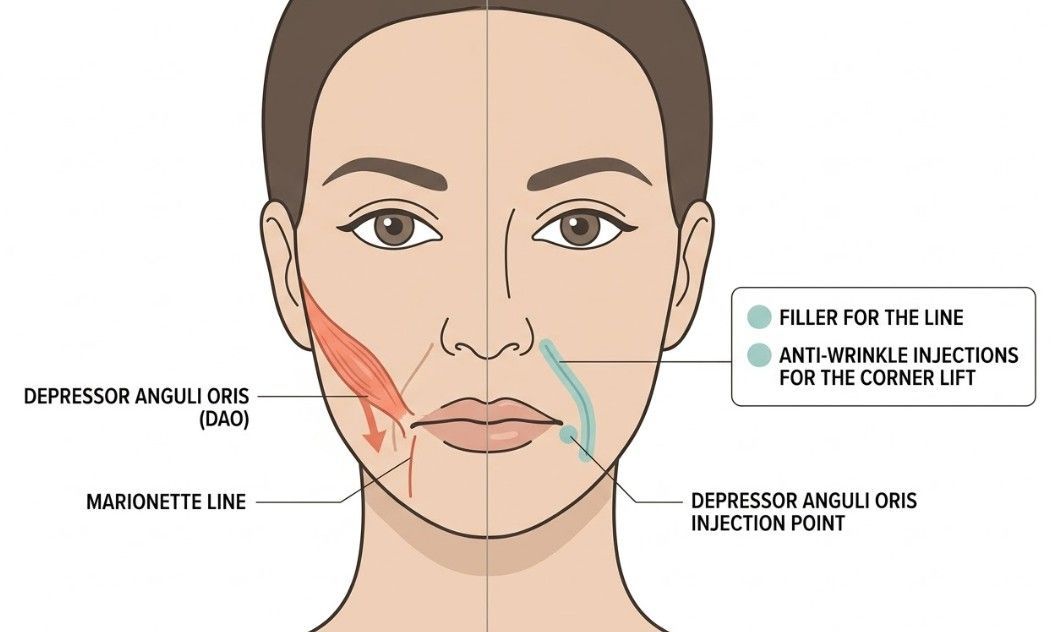
Marionette lines develop as a result of several overlapping factors that come together as the face ages. Volume loss in the mid and lower face reduces the support for the tissue around the mouth, causing it to descend. The depressor anguli oris — the muscle responsible for pulling the corners of the mouth downward — becomes relatively more dominant as the surrounding tissue loses structure. And repeated facial movement over the years gradually etches the lines more deeply into the skin.
The result is a line that runs from the corner of the mouth downward — initially appearing only on movement, then becoming visible at rest, and eventually deepening into a more prominent crease that gives the lower face its characteristic downturned appearance.
In some clients the corners of the mouth themselves also turn downward — a concern that can be addressed with a small amount of anti-wrinkle injections into the depressor anguli oris alongside filler, which I'll discuss where relevant during consultation.
How Is the Treatment Carried Out?
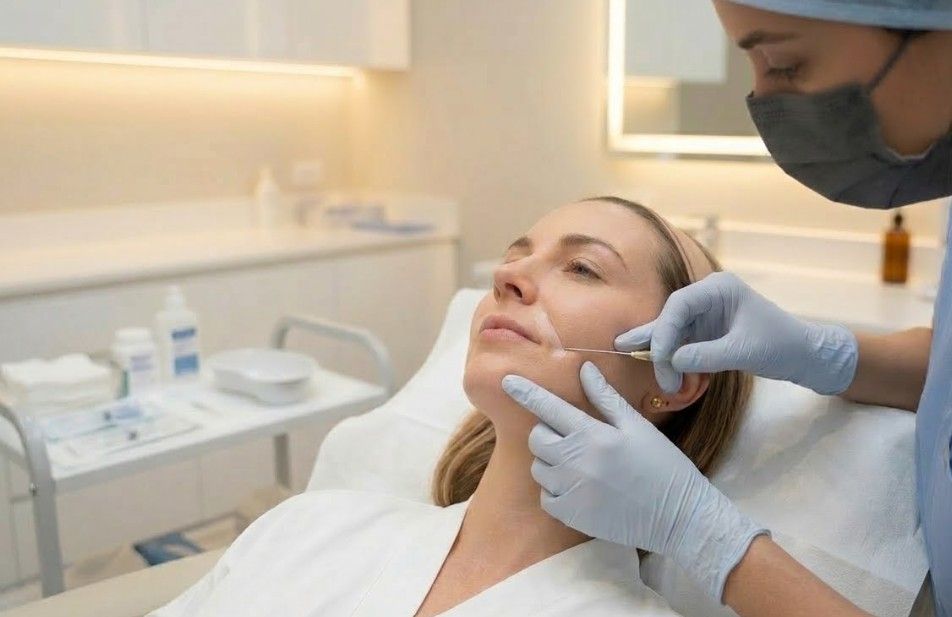
I treat marionette lines using a combination of careful filler placement along and around the line itself, alongside assessment of the broader lower face to understand what's contributing to the concern. In most cases I use a cannula technique for this area — it allows accurate placement along the length of the line whilst minimising bruising and reducing the risk associated with the blood vessels present in this part of the face.
The amount of product needed varies significantly between individuals depending on the depth of the lines, the degree of lower face volume loss present, and what we're working to achieve. I assess carefully during consultation and always work incrementally, building the result gradually rather than placing everything at once.
Where the corners of the mouth are also downturned, a small amount of anti-wrinkle injections into the depressor anguli oris muscle — the muscle that pulls the corners of the mouth downward — can work alongside filler to lift the corners slightly and give a more complete result. This is something I'll discuss and recommend only where I genuinely think it adds meaningful value.
The full treatment typically takes 30 to 45 minutes and requires no significant downtime. I see clients for marionette line treatment from across Nottingham including those travelling from Hucknall, Kirkby in Ashfield, Annesley, and Ravenshead — most of whom are comfortable returning to normal activities the same day.
What Results Can I Expect?
Some initial swelling is normal after marionette line treatment and is most noticeable in the first 24 to 48 hours. This settles within a few days and full results are properly visible at two weeks — the point at which I see all new clients for a follow-up assessment.
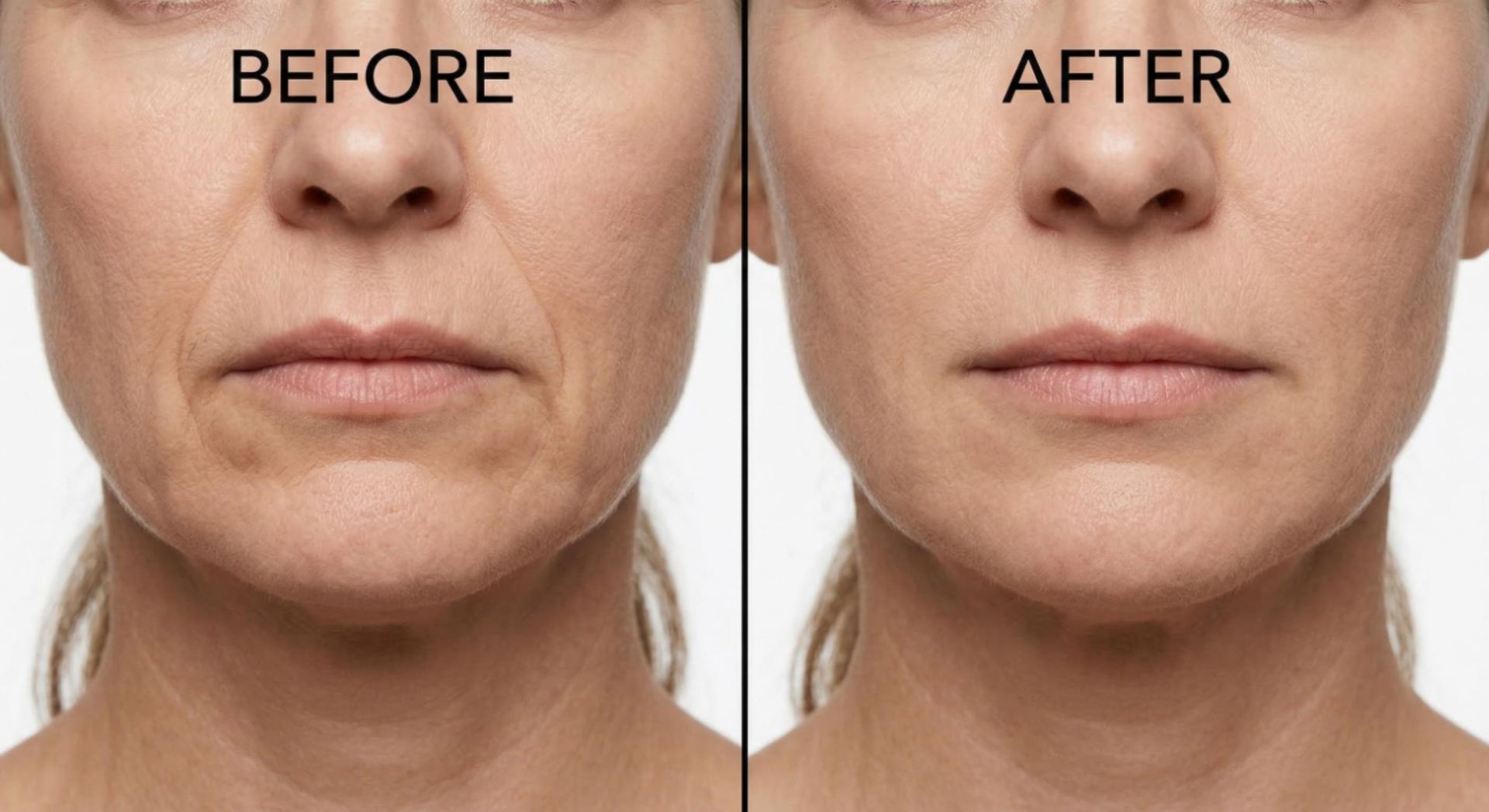
The improvement in the resting expression of the face is typically the most striking aspect of the result — the downturned quality softens and the lower face looks more balanced and relaxed without looking treated. Clients often find that friends and family comment that they look well or less tired without being able to identify exactly why, which is precisely the outcome we're aiming for.
Results from marionette line filler typically last nine to twelve months, though this varies between individuals. The lower face experiences a reasonable degree of movement which means filler in this area breaks down more quickly than in very low-movement areas. I'll give a realistic expectation during consultation based on your individual situation.
Marionette Lines and the Lower Face as a Whole
Marionette lines rarely exist entirely independently of other lower face concerns. Volume loss that contributes to marionette lines often also affects the nasolabial folds, the chin area, and the jawline — and understanding those relationships is important when planning treatment that looks natural and balanced.
When clients come to me for marionette line treatment I always assess the lower face as a whole during consultation. In some cases treating the marionette lines directly gives the best result. In others, addressing cheek or lower face volume loss alongside the marionette lines gives a more complete and natural outcome. And occasionally, anti-wrinkle injections to the depressor anguli oris alongside filler gives the most comprehensive improvement.
I'll always give you my honest assessment of the most effective approach for your specific situation rather than simply filling the lines you've pointed out.
Who Is Marionette Line Treatment Suitable For?
Marionette line treatment tends to suit clients who:
- Have lines running downward from the corners of the mouth that are visible at rest
- Feel their resting expression looks sad, stern, or tired despite feeling well
- Have noticed the corners of their mouth turning downward with age
- Want to improve lower face balance and expression without surgery
- Are considering broader lower face treatment and want to discuss the options holistically
Booking Your Marionette Line Consultation in Nottingham
If you're based in or around Nottingham — including Arnold, Gedling, Carlton Hill, or Netherfield — and you'd like to discuss marionette line treatment with a practitioner who'll give you a genuinely honest assessment of what's achievable, get in touch with Signature Aesthetics today. I'd love to hear from you.
Marionette Lines FAQs
Can marionette lines be completely removed with filler?
No — and attempting to do so would require overfilling to a degree that creates an unnatural result. The appropriate goal is meaningful softening — reducing the depth and prominence of the lines so that the resting expression of the face looks more relaxed and balanced, whilst preserving completely natural movement and expression. That's what produces results clients are genuinely happy with long term.
What's the difference between nasolabial folds and marionette lines?
Nasolabial folds run from the sides of the nose to the corners of the mouth. Marionette lines extend downward from the corners of the mouth towards the chin. They're different lines in different locations, though they're often both present and both influenced by similar underlying factors — mid and lower face volume loss and tissue descent. Treating them together as part of a broader lower face assessment often gives the most balanced result.
Can anti-wrinkle injections help with marionette lines?
Anti-wrinkle injections alone won't address marionette lines — the lines themselves are best treated with filler. However, where the corners of the mouth are also downturned due to an overactive depressor anguli oris muscle, a small amount of anti-wrinkle injections into that muscle alongside filler can lift the corners slightly and give a more complete result. This is something I assess during consultation and recommend only where I think it genuinely adds value.
How long does marionette line filler last?
Typically nine to twelve months, though this varies between individuals. The lower face experiences moderate movement which means filler here breaks down more quickly than in low-movement areas such as the cheeks or jawline. Individual metabolism also plays a role and becomes clearer after a first treatment.
Will the treatment affect my smile or facial expression?
No — marionette line filler doesn't affect the muscles responsible for smiling or expression. The lines themselves may deepen slightly on strong expression, which is entirely normal — the treatment simply softens their appearance at rest. Full natural expression is completely preserved.
Is there much bruising after marionette line treatment?
Bruising is possible in the lower face area, though using a cannula technique reduces this risk compared to needle placement. Any bruising that does occur typically resolves within seven to ten days. I'll go through full aftercare guidance at your appointment including what to avoid in the days following treatment to minimise bruising risk.
I've been told I need a lot of filler for my marionette lines — is that rig
The amount of filler needed for marionette lines varies considerably between individuals. Some clients achieve a meaningful improvement with a modest amount of product. Others with more significant volume loss or deeper lines may need more. What I'd caution against is any practitioner recommending a large amount of product without a thorough consultation and facial assessment — the right amount is always determined by the individual, not by a standard package or pricing structure.
Can marionette line treatment be combined with other treatments?
Yes, and in many cases treating marionette lines alongside nasolabial folds, cheeks, or chin gives the most balanced and natural result for the lower and mid-face as a whole. I'll discuss whether a combined approach would benefit you during your consultation — and as always, I'll only recommend it if I genuinely think it improves your overall outcome.